
Opening an Israeli company: What foreign investors need to know
Israel is one of the world’s most innovative business locations and remains an attractive destination for international investors and companies. However, a successful market entry depends not only on setting up a business, but also on choosing the right corporate structure at an early stage and on careful tax and compliance planning. In the first part of this article, Ecovis consultants explain which strategic decisions need to be made and how the startup process works.
Selecting the right structure before registration
Choosing the appropriate corporate structure is one of the most critical strategic decisions when entering the Israeli market. Whether establishing a subsidiary or a branch of a foreign company, each option entails distinct legal, tax, and operational implications, as well as consequences regarding liability, available incentives, and long-term business development. Therefore, the optimal structure should be aligned with the company’s specific objectives at an early stage.
Foreign ownership is generally permitted
Israel welcomes foreign investment and in most industries, there are no restrictions on foreign shareholders or directors. A foreign individual or foreign corporation may generally own 100 percent of an Israeli private company.
The incorporation process itself is relatively efficient once the required documentation has been prepared. However, investors should expect comprehensive Know Your Customer (KYC) and beneficial ownership procedures, particularly where international corporate structures are involved. These requirements reflect Israel’s anti money laundering framework and international compliance standards.
We support international clients through every stage—from the initial planning phase, incorporation, tax registration, banking arrangements, payroll, and accounting, right through to ongoing regulatory compliance.
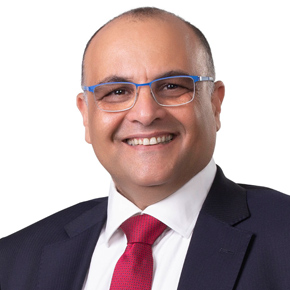
Ehud Ozery, CPA, Managing Partner, ECOVIS Israel Ozery CPA, Ramat Gan
Incorporation is only the beginning
Receiving a certificate of incorporation does not mean the company is ready to operate. Most businesses must also complete registrations with the Israel Tax Authority, VAT Authority and National Insurance Institute. Employers must register for payroll reporting before hiring employees, while businesses engaged in taxable activities generally require VAT registration before commencing operations. Delays at this stage can postpone invoicing, hiring or commercial activity, making early planning essential.
Banking often takes longer than incorporation
Many foreign investors are surprised to discover that opening a corporate bank account is frequently more time-consuming than incorporating the company itself. Israeli banks apply detailed compliance procedures, particularly for companies with foreign shareholders or complex ownership structures. Preparing the necessary documentation in advance and presenting a clear explanation of the business activity significantly improves the process.
Registering for VAT usually requires the company to maintain a local Israeli bank account. Consequently, registration with the tax authorities takes place only after the bank account has been set up. However, it is possible to prepare several of the corporate documents required during the incorporation process in parallel and use them for both the account opening and the subsequent VAT registration. This helps optimise the market entry process. Professional guidance during this phase often determines whether the onboarding process proceeds smoothly or is unnecessarily delayed by several months.
Understand Israeli tax rules from day one
Israel offers an advanced tax system supported by an extensive network of international tax treaties. However, foreign investors should carefully evaluate issues including corporate taxation, VAT obligations, transfer pricing, withholding taxes, permanent establishment exposure and intercompany transactions before commencing operations.
Foreign investors should also become familiar with Israel’s evolving regulatory framework governing commercial payments and financial transactions. For example, recent legislation requires businesses to obtain an allocation number from the Israel Tax Authority for VAT invoices with a total amount exceeding ILS (Israeli shekel) 5,000 before they can be used for input VAT purposes. In addition, Israel’s Cash Reduction Law places strict limits on cash payments in commercial transactions as part of the country’s efforts to combat the shadow economy, tax evasion and money laundering. Depending on the nature of the transaction, cash payments are generally limited to prescribed thresholds, such as ILS 6,000 in business transactions and ILS 15,000 between private individuals.
As a rule, a foreign-owned company or branch operating in Israel without a local director must appoint a local representative for VAT and other regulatory purposes and maintain a registered address in Israel. Many international groups use professional service providers to fulfil these roles and handle administrative tasks.
Compliance is an ongoing process
Israeli companies are subject to ongoing accounting, payroll, VAT, tax reporting and corporate compliance obligations throughout the year. These requirements are generally manageable when implemented properly from the outset, but they should never be viewed as administrative formalities. Strong compliance provides management with reliable financial information while reducing regulatory and operational risk. For multinational groups, alignment between Israeli reporting requirements and group reporting standards, whether under IFRS, US GAAP or another framework, is equally important.
Think beyond registration
The most successful foreign investors approach Israel as a long-term business platform rather than simply another jurisdiction in which to incorporate a company. Questions such as future recruitment, incentive programs, intellectual property ownership, financing arrangements, transfer pricing policies and eventual expansion should all be considered before operations begin. An experienced local adviser can coordinate these issues from the outset and ensure that legal, tax, accounting and operational considerations support the same commercial objectives.